Three-, four- and five-blade ceiling fans can all perform well. Blade count influences appearance and engineering, but it does not provide a reliable performance ranking on its own. The complete fan design matters much more.
Searching for how many blades should a ceiling fan have often produces broad advice, but a useful decision starts with the actual room. Size, layout, ceiling or cavity conditions, controls and household routines all affect the result. This guide explains the main considerations in a practical order for Australian homeowners.
Before purchasing, separate essential requirements from optional preferences. Safety, product suitability and installation come first; finish, connected features and convenience can then be compared among appropriate options. This approach makes how many blades should a ceiling fan have research clearer and reduces costly assumptions.
Understand the complete system
Airflow comes from the interaction of motor, blade pitch, blade shape, diameter and speed. Comparing blade count without these factors can lead to an inaccurate conclusion. This factor should be assessed in the context of the whole room rather than as a stand-alone specification. Measure the space, record existing fittings and compare the manufacturer’s current instructions before making a decision.
Three-blade fans
Three-blade designs often have a clean, contemporary appearance and can use broad sculpted blades. They suit minimalist interiors, but performance must still be checked model by model. In practice, the best result comes from matching the product to everyday use. Think about when the room is occupied, who operates the equipment and which outcome matters most: comfort, visibility, airflow, quietness or simplicity.
Four-blade fans
Four blades can create a balanced visual profile and are common in compact and versatile designs. They are not automatically quieter or stronger than three-blade alternatives. Avoid relying on appearance or one headline number. Product dimensions, controls, installation conditions and the surrounding building can materially change how the solution performs after installation.
Five-blade fans
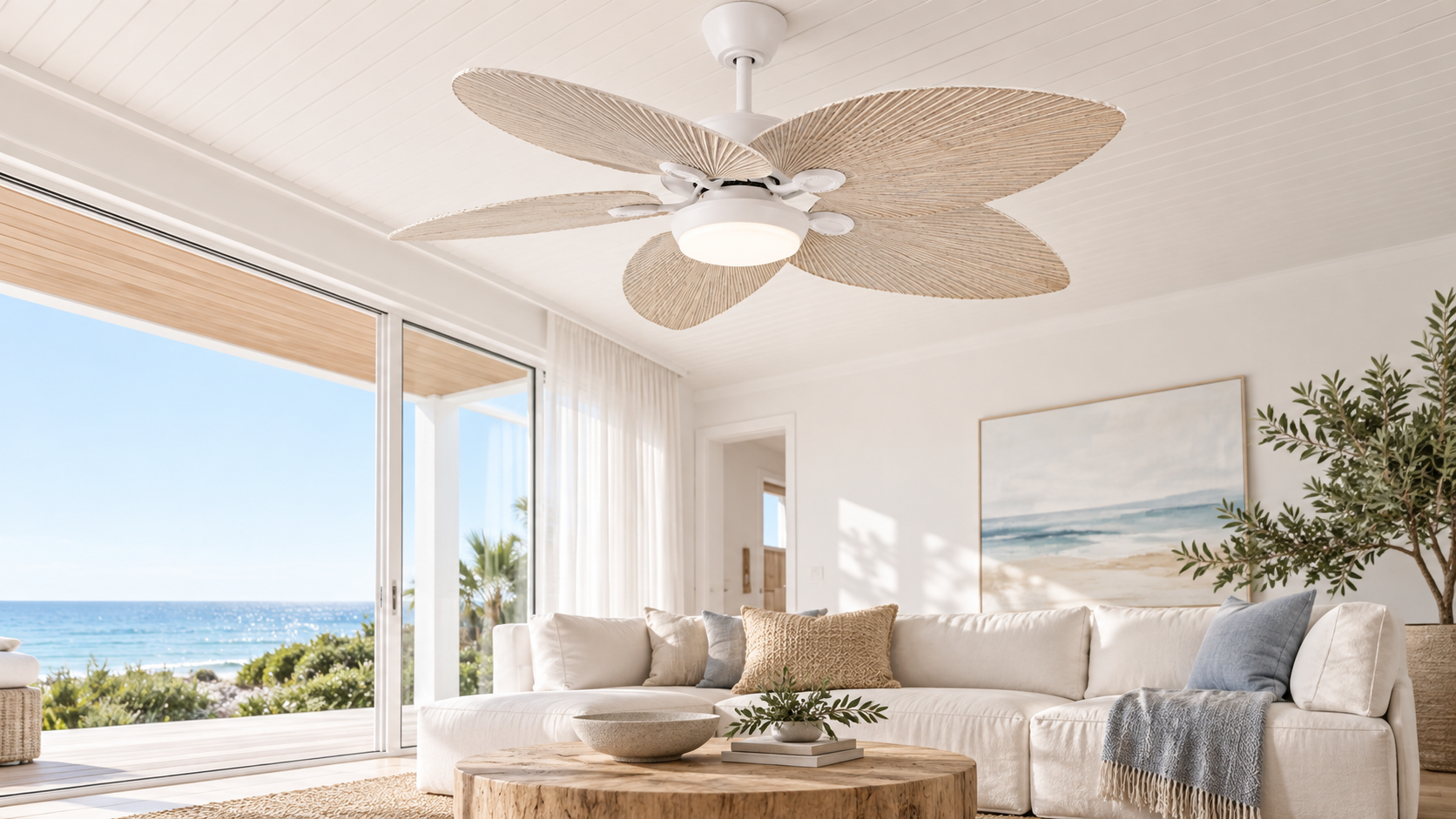
Five blades can create a fuller decorative look, including tropical or palm-inspired styles. Extra blades do not guarantee extra airflow because motor and blade geometry remain decisive. A useful shortlist contains only products that meet the non-negotiable requirements. Once those are satisfied, compare finish, convenience and price instead of allowing those preferences to override suitability.
Compare published air movement
Use the manufacturer’s airflow data, blade span and speed settings to compare models. Look at comfortable low and medium speeds as well as maximum output. Conditions differ between Australian homes, so general guidance is a starting point rather than an installation instruction. Renovations, high ceilings, coastal air and restricted cavities can all require additional assessment.
Match the room style
Fewer blades can feel architectural and uncluttered; more blades may create a softer or more decorative ceiling feature. Consider finishes and proportions with the furniture below. Write this requirement down before shopping and verify it against the exact model. That creates a clearer conversation with the electrician or installer and reduces the risk of ordering an incompatible product.
Account for room size
A correctly sized fan with an appropriate span is more important than a preferred blade count. Measure first and retain the clearances required by the product instructions. Consider both immediate performance and long-term use. Controls should remain convenient, cleaning should be manageable and replacement or service information should be available if the household needs support later.
Choose by performance and design
Browse the ceiling fan range and use the Ceiling Fan Finder to narrow the range. Treat blade count as one design preference within a broader comparison, not as the deciding specification. If the existing installation is being replaced, never assume that similar-looking products share the same cut-out, mounting, wiring or clearances. Confirm measurements before the old appliance is removed.
Questions to answer before requesting a quote
Before contacting an installer, prepare the room dimensions, ceiling or cavity details, photographs of the proposed location and the exact model being considered. Explain how the room is used, which functions are essential and whether an existing product is being replaced. For how many blades should a ceiling fan have, this information helps the professional identify access, mounting, wiring, ducting or clearance questions early. Ask what work is included, which components are required and whether any building repairs or modifications fall outside the quote. A clear scope makes product and installation costs easier to compare.
How to compare shortlisted products fairly
Create a simple comparison using the same fields for every candidate: dimensions, stated performance, controls, lighting or heating functions, approved location, included accessories, warranty and installation requirements. Do not compare one product at maximum output with another at an everyday setting, or assume a missing specification has the value you want. For how many blades should a ceiling fan have, give priority to suitability and usable performance before finish or promotional price. Save the product pages and manuals you relied on so specifications can be checked again if the listing changes before installation.
Installation, handover and aftercare
After installation, ask the electrician or installer to demonstrate every control and explain normal operating sounds, cleaning limits and isolation procedures. Keep the invoice, model number, manual and warranty details together. Check that the appliance operates through all intended settings and that no unusual vibration, noise, heat, odour or moisture issue is present. If something changes later, stop using the product when safety may be affected and seek qualified advice. Good handover and routine care protect the value of a well-considered purchase.
Frequently asked questions
What should I check first when researching how many blades should a ceiling fan have?
Start with accurate room measurements, the intended installation location and the outcome you need. Then compare exact product specifications and ask a licensed professional to confirm installation requirements.
Can I choose using online advice alone?
Online guidance can create a shortlist, but it cannot inspect your ceiling, wiring, ducting or building conditions. Use it with the product manual and professional advice.
Should price be the main deciding factor?
Price matters, but compare suitability, controls, warranty, installation needs and expected use. A lower-priced option is poor value if it cannot perform the required job.
Who should complete electrical installation?
Hard-wired fans, heaters and exhaust products should be installed by a licensed electrician in accordance with applicable requirements and manufacturer instructions.
Final checklist for how many blades should a ceiling fan have
Measure the room, identify essential functions, check product dimensions and clearances, review controls and confirm the installation path. Retain manuals and warranty information after purchase. These steps turn general how many blades should a ceiling fan have research into a defensible room-specific decision.
Four Seasons Living provides tools and product categories to make comparison easier. Use the relevant finder, review current specifications and confirm stock, finishes and product details immediately before ordering.
Explore the ceiling fan range, use the Ceiling Fan Finder or review compatible ceiling fan accessories as relevant to your room.